
The State of the U.S. Sports Betting Market in 2026
Eight years after PASPA fell, the American market is no longer a simple legalization story. It is a state-by-state ecosystem shaped by tax policy, licensing structure, operator con...
Updated for the 2026 season
We test sign-up flows, compare live odds against the market, time real withdrawals, and read every word of the terms so you don't have to. No affiliate fluff - just the sportsbooks worth your first deposit, ranked and explained.
By overall score across odds, app quality, and payout speed
Every sportsbook markets itself as "the best odds in the business." They can't all be right, and most bettors find out which claims were true only after they've already deposited. We built this site to close that gap.
Every book we review is opened with a real account, funded with a real deposit, and used to place real bets across at least three sports. We are not describing a press kit - we are describing what happened when we clicked the buttons.
Each book is scored on odds competitiveness, bet variety, app stability, withdrawal speed, customer support response time, and how honest the promotional terms are. The full methodology is on every review page.
We accept referral commissions when readers sign up through our links - that's how the site stays free - but no sportsbook can pay to change its ranking, and we say so explicitly on every page that carries a link.
Sports betting has gone from a Nevada-only novelty to a mainstream, regulated industry in roughly a decade. Here's what actually changed, and what it means for you as a bettor.
Until May 2018, the Professional and Amateur Sports Protection Act effectively confined legal single-game sports wagering to Nevada. When the Supreme Court struck that law down in Murphy v. NCAA, it didn't legalize sports betting nationwide - it simply removed the federal barrier and handed the decision to each state. What followed was one of the fastest waves of gambling expansion in U.S. history. States moved at their own pace and under their own rules, which is why the betting landscape today looks less like a single national market and more like fifty separate ones stitched loosely together.
Most states that legalized betting chose a licensed, regulated model: a small number of operators (usually tied to an existing casino, tribal gaming compact, or a standalone online license) are permitted to accept wagers, and each is overseen by a state gaming commission that sets rules on advertising, responsible-gambling tools, tax rates, and dispute resolution. This is the model behind the major national apps - DraftKings, FanDuel, BetMGM, Caesars, ESPN BET, and others - and it's the only kind of sportsbook we review on this site. Some states permit online (mobile) wagering; others restrict betting to retail sportsbooks inside casinos; a handful still allow neither. If you're not sure what's legal where you live, the deciding factor is always your state's own gaming commission, not what an app's marketing implies.
It's worth being explicit about something the betting industry doesn't advertise loudly: "bookie" historically referred to an unlicensed, often illegal, individual taking bets outside any regulatory structure - no consumer protections, no dispute process, no guarantee you'd ever see a payout. That world still exists, mostly online, dressed up as offshore "sportsbooks" incorporated in jurisdictions with no enforcement relationship to U.S. regulators. We don't review those operators, and we'd steer you away from them even if we did. Every operator ranked on this site holds an active license in at least one U.S. state and is required to segregate customer funds, verify identity, and follow state-mandated responsible-gambling protocols. That distinction - licensed versus unlicensed - matters more to your actual safety as a bettor than any bonus offer ever will.
Rule of thumb: if a site won't tell you which state gaming commission licenses it, that's your answer.
Tax treatment is another area where states diverge sharply, and it affects operators' odds and promotions indirectly. States with high tax rates on sportsbook revenue tend to see thinner promotional offers and slightly worse pricing over time, because operators pass some of that cost through. States with lower or more moderate tax rates are generally where you'll find the most competitive markets. None of this is something you need to calculate yourself - it's baked into the differences you'll see when you compare books on this site - but it explains why the "same" sportsbook can genuinely feel different from state to state.
Most "how to pick a sportsbook" content online is a thin excuse to push you toward whichever operator pays the highest commission. Here's the version we'd give a friend.
Start with legality, not features. Confirm the book is licensed in your state before you look at anything else. Every sportsbook we rank publishes its license information, usually in the footer of its own site, and every state gaming commission publishes a list of licensed operators. This step takes ninety seconds and eliminates the entire category of offshore risk.
Then look at what you'll actually bet. A bettor who mostly wants to put five dollars on Sunday's NFL slate has different needs than someone building same-game parlays every night across four sports, and both have different needs than someone who wants to bet in-play on soccer at 6 a.m. If you care about a specific niche - college basketball player props, UFC, tennis in-play markets, or golf futures - check that the book actually carries deep markets in that sport before you judge it on football odds alone. Football is where every book competes hardest; it tells you the least about how a book treats less mainstream sports.
Compare the number on the screen, not the marketing. Odds move constantly and differ slightly between books on the same game, and those small differences compound over a betting career. The standard way to compare is "-110 versus -105" on a spread bet: at -110 you risk $110 to win $100; at -105 you risk only $105 to win $100 on the identical bet. That's not a rounding error - over hundreds of bets, shopping for better lines is one of the few edges a recreational bettor fully controls. We note each book's typical hold (the built-in house edge on standard markets) in every review specifically so you can compare this.
Read the bonus terms before you read the bonus headline. "Bet $5, Get $200 in Bonus Bets" is a real, common offer structure, and it can be genuinely good value - but the details that matter are how the bonus bets are issued (all at once or in installments), how long you have to use them, whether they expire, and whether winnings from a bonus bet include the stake or only the profit. We break every current offer down in these terms on the individual review pages, because the headline number is designed to be memorable, not to be the whole story.
Weigh withdrawal speed heavily. Deposits are instant everywhere; that's not a differentiator. Withdrawals are where sportsbooks vary enormously, from same-day payouts via PayPal or debit card to multi-day waits for a mailed check. We time actual withdrawals as part of every review, because a book that's slow to pay is a book that's effectively borrowing your winnings.
Don't ignore the app. If placing a bet in the final two minutes of a close game takes twelve taps and two reloads, you will miss the number you wanted. App speed and bet-slip design are not cosmetic - they change the price you actually get.
Odds are just a price. Understanding how that price is built is the single most useful thing a new bettor can learn, and it takes less time than most people expect.
In the U.S., odds are almost always shown in "American" or "moneyline" format: a plus or minus number attached to each side of a bet. A minus number tells you how much you'd need to risk to win $100; a plus number tells you how much you'd win on a $100 bet. So -150 means risking $150 to win $100 (plus your stake back), and +130 means a $100 bet returns $130 in profit. The minus side is the favorite; the plus side is the underdog. Every sportsbook we review uses this format by default but lets you switch to decimal or fractional odds in settings, which matters if you're used to betting internationally.
Built into every price is the "vig" or "juice" - the sportsbook's built-in margin. On a perfectly even matchup, true 50/50 odds would be +100 on both sides. In practice, a typical spread or total is priced closer to -110 on both sides. That gap between the fair price and the offered price is how sportsbooks make money on volume even when their own predictions are accurate. Understanding the vig is what separates a bettor who can evaluate whether a bet has value from one who's just reacting to a number.
The three most common bet types are the moneyline (picking who wins outright, no margin involved), the spread (a handicap applied to make a mismatched game closer to a 50/50 proposition, typically priced near -110 either way), and the total or "over/under" (betting on the combined score relative to a number set by the book). Nearly every other bet type - parlays, teasers, props, futures - is a variation or combination built from these three building blocks. We cover each in depth in the dedicated bet-types guide linked below, with worked examples for a specific slate rather than abstract formulas.
One habit separates long-term recreational bettors who enjoy the hobby from those who burn out: treating the posted odds as information rather than a guarantee. A -200 favorite is priced to win roughly two-thirds of the time in the market's estimation - not certain, not even close to it. Odds compress a huge amount of uncertainty into a single number, and it's easy to forget that the number is a probability estimate, not a fact.
Every strategy guide on this site assumes you've done this first. It's less exciting than picking winners, and it's the difference between betting as a hobby and betting as a slow-motion problem.
A bankroll is simply the amount of money you've set aside for betting and nothing else - not rent money, not an emergency fund, not a credit card advance. The number matters less than the boundary: it should be an amount you've already mentally accounted for losing entirely, because on any given week or month, you can. Betting with money you can't afford to lose turns a form of entertainment into a source of stress no strategy can fix.
Once you have a bankroll, the standard recreational guideline is to risk somewhere between 1% and 5% of it on a single bet, with most disciplined bettors sitting closer to 1–2%. This isn't about being timid - it's about survival math. A bettor risking 10% of their bankroll per bet can be wiped out by a fairly ordinary losing streak that says nothing about whether their picks are good; a bettor risking 1–2% can absorb the same streak and keep betting with a clear head. Parlays and long-shot futures, because they're higher variance by design, generally warrant smaller stakes than straight single-game bets, even when the potential payout looks tempting.
If you can't say out loud what percentage of your bankroll you just risked, that's a sign to write your unit size down before your next bet, not after.
It also helps to separate your bankroll from your day-to-day spending account and to review it on a fixed schedule - weekly or monthly - rather than after every single result. Betting decisions made immediately after a big loss, trying to "get back to even" in the same session, are consistently where bettors do the most damage to both their bankroll and their enjoyment of the hobby. We go deeper on staking plans, unit sizing, and tracking your results in the dedicated bankroll management guide.
The offers are real. The fine print determines whether they're actually worth taking.
New-user offers generally fall into a few recurring structures. A deposit match gives you bonus funds equal to a percentage of your deposit, usually released gradually as you place bets rather than all at once. A bet-and-get offer (the "bet $5, get $200 in bonus bets" style) credits you a fixed amount of bonus bets once your qualifying wager settles, regardless of whether it wins. A no-sweat or first-bet insurance offer refunds your stake as bonus bets if your very first wager loses. Each has different practical value depending on how you actually bet, and each comes with rules worth reading before you deposit.
The details that most affect real value: whether bonus bets are issued as one lump sum or in smaller pieces over several days (pieces are harder to use efficiently), how many days you have before they expire, what minimum odds a qualifying bet must meet, and - critically - whether winning a bonus bet returns your stake or only the profit. That last point alone can change the effective value of an offer by 10–20%, and it's almost never in the headline. We list these terms explicitly, side by side, on every review.
Ongoing promotions - odds boosts, parlay insurance, profit boosts, loyalty programs - are where the long-term value of a sportsbook actually lives, since a welcome offer is a one-time event but a betting relationship is not. We track which books run genuinely useful recurring promotions versus which ones dress up standard pricing as a "boost."
Full methodology and a complete 3,000+ word review for each book is linked below. This table is the summary.
| Rank | Sportsbook | Best for | Typical hold | Payout speed | Score | |
|---|---|---|---|---|---|---|
| 1 | DraftKings Sportsbook | Overall value & DFS crossover | Low–moderate | Fast (card/PayPal) | 9.6/10 | Read review → |
| 2 | FanDuel Sportsbook | App design & same-game parlays | Low–moderate | Fast | 9.5/10 | Read review → |
| 3 | BetMGM | Boosted odds & casino crossover | Moderate | Fast | 9.2/10 | Read review → |
| 4 | Caesars Sportsbook | Loyalty rewards for frequent bettors | Moderate | Moderate | 9.0/10 | Read review → |
| 5 | bet365 Sportsbook | In-play & soccer markets | Low | Fast | 8.9/10 | Read review → |
| 6 | ESPN BET | Casual bettors & media integration | Moderate | Moderate | 8.6/10 | Read review → |
| 7 | Fanatics Sportsbook | Rewards points & merch crossover | Moderate | Moderate | 8.4/10 | Read review → |
| 8 | Hard Rock Bet | Growing state footprint | Moderate–high | Moderate | 8.2/10 | Read review → |
| 9 | BetRivers | Loyalty-focused regional bettors | Moderate | Moderate | 8.1/10 | Read review → |
| 10 | Bally Bet | Simple, low-frills betting | Moderate–high | Slower | 7.8/10 | Read review → |
Rankings reflect our latest testing round and shift over time as odds, apps, and promotions change. "Hold" refers to the sportsbook's typical built-in margin on standard markets like spreads and totals - lower is generally better for the bettor. See the full reviews hub for our scoring methodology and every category breakdown.
Ten guides, from your first bet slip to reading a closing line. No prerequisite knowledge assumed.
What actually happens between placing a bet and getting paid, start to finish.
American, decimal, and fractional odds, plus how lines move and why.
Moneylines, spreads, totals, parlays, teasers, props, and futures.
Every field explained so you never submit a bet you didn't mean to place.
Unit sizing, staking plans, and tracking results without a spreadsheet degree.
Wagering requirements, expiration windows, and the terms that matter.
The real math behind combined odds, with worked examples.
How in-game lines update, latency risk, and where live betting fits.
Rollover, playthrough, qualifying bet, and every other term decoded.
Deposit limits, self-exclusion, and how to notice when betting stops being fun.
Not "guaranteed picks." Frameworks that hold up over hundreds of bets.
Why comparing prices across books before every bet is the single highest-value habit a recreational bettor can build.
How to compare your own probability estimate against the market's implied odds.
The metric sharp bettors track more closely than win rate, and why.
How to build parlays that reflect genuine correlation instead of just chasing a bigger number.
The recurring, avoidable errors that separate a sustainable hobby from a bad month.
Every book we review is required by its state license to offer real controls. Use them before you think you need them.
Every licensed U.S. sportsbook offers deposit limits, wager limits, session time reminders, cooling-off periods, and full self-exclusion, because state gaming commissions require it as a condition of the license. These tools work best when you set them on day one, at a level you'd be comfortable with even on a bad night - not after a session that already went sideways.
A few honest signals worth checking in with yourself about: betting more than you planned to "win back" a loss, hiding the amount or frequency of your betting from people close to you, or feeling like betting has stopped being enjoyable and started being something you feel compelled to do. None of these mean something is wrong with you - they mean it's a good time to use the tools built into every app, or to talk to someone.
If betting has stopped being fun, help is free and confidential:
Five new original articles covering where the sports betting market is going, how promotions are structured, and why the product keeps changing.
Eight years after PASPA fell, the American market is no longer a simple legalization story. It is a state-by-state ecosystem shaped by tax policy, licensing structure, operator con...
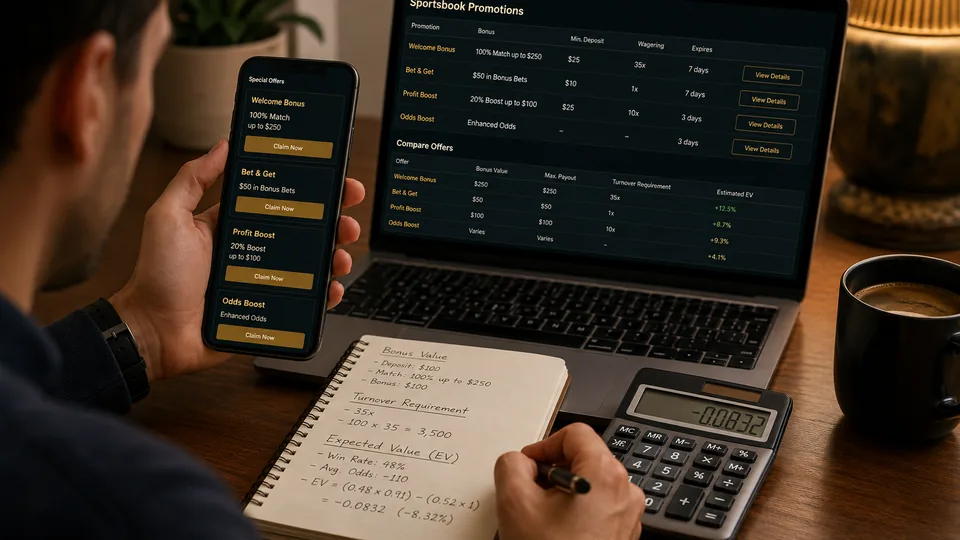
Promo offers are not random generosity. They are acquisition tools shaped by customer lifetime value, competitive pressure, risk management, and regulatory scrutiny. That is why th...
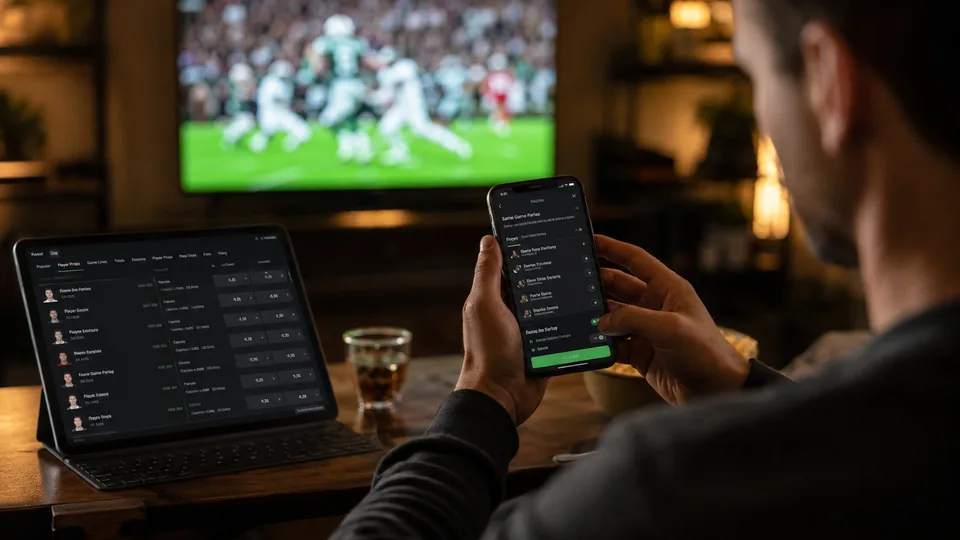
The modern sportsbook is no longer built around only moneylines, spreads, and totals. It is increasingly built around player-level markets, parlay builders, and live interfaces des...

One of the clearest strategic shifts in betting has been convergence: sportsbooks borrowing trust, attention, and habits from media companies and retail brands that already had a s...
It depends entirely on your state. Most U.S. states now permit some form of legal sports betting, but the specifics - online versus retail-only, which operators are licensed, minimum age - vary by state. Check your state gaming commission's website for the current, authoritative answer, and only use operators licensed in your state.
A licensed U.S. sportsbook is regulated by a state gaming commission, required to segregate customer funds, verify your identity, follow advertising rules, and offer responsible-gambling tools. An offshore site operates outside that structure entirely - there's no regulator to appeal to if a payout is delayed or refused, and no guarantee your funds are protected. We only review licensed operators.
Usually not directly. Most new-user offers pay out in "bonus bets" - site credit you can wager, with winnings from that wager typically paid as real, withdrawable cash (terms vary by book on whether the bonus stake itself is included). The exact structure matters a lot and is covered in our promo terms glossary and every individual review.
Each book manages its own risk and betting volume, so lines can drift independently based on where each book's customers are betting, even for the identical matchup. This is exactly why comparing prices across two or three books before betting - "line shopping" - is one of the most reliable ways to improve your long-run results.
Consistently beating the market over the long run is genuinely difficult - sportsbooks price in a built-in margin (the vig) specifically so that an average bettor loses money over time even if they pick winners at a reasonable rate. Treating betting as entertainment with a real budget, rather than as a reliable income source, is the honest framing almost every serious voice in this space will give you.
18 or 21 depending on the state and, in some cases, the specific operator. Every licensed sportsbook verifies age and identity during sign-up, so check the requirement for your specific state before creating an account.
We may earn a referral commission when a reader signs up through a link on this site, at no extra cost to the reader. This never affects how a book is scored - our full methodology is published on the reviews hub, and it's applied identically whether or not a commission relationship exists.